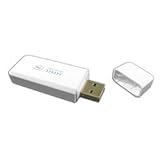
I got this unit yesterday and spent a couple of hours searching Google, the manufacturers forum, and the USB driver manufacturer's site to assemble an appropriate set of drivers and utilities for Windows 7 home professional 64-bit. Bottom line on installation is that you need perseverance and a fair amount of technical knowledge. Having said that the unit appears to be extremely sensitive. Right now I'm in my office and its tracking 11 satellites. This performance is significantly better than my Garmin 765. Here are some tips for potential installers.
1. The blue LED which indicates unit status is actually inside the plastic housing and is not visible in bright light. I initially installed the unit in my notebook outside and was perplexed by the references to the blue LED. Once I carried it inside I noticed that the LED was flashing indicating that the unit was actually navigating. At that point I had not succeeded in getting the navigator to communicate with the notebook and was considering returning it to Amazon as a dud.
2. The supplied miniCDU monitoring utility does not automatically connect to the navigator. You must hit the connect button on the upper left hand side of the GUI. This utility also seems to default to COM1 as the input port every time you start it rather than the actual port being emulated by the navigator.
So far my pros are: high sensitivity, ease of integration with Google Earth (once I got it working), high quality construction, and extremely good value for money. My cons: this is not a plug-and-play device, you need to work quite hard to get it installed and eliminate the side effects (like the bouncing cursor mentioned elsewhere in these reviews).
I read the other reviews here before I bought the item and given that I was forewarned about installation I'm very pleased with it so far. I update this if I get any problems or failures in the future.Get more detail about Usg Nd-100 Usb Gps Receiver.


No comments:
Post a Comment